
The Story Behind Insect Hotels
Where they came from, where they are, and why you should build one.
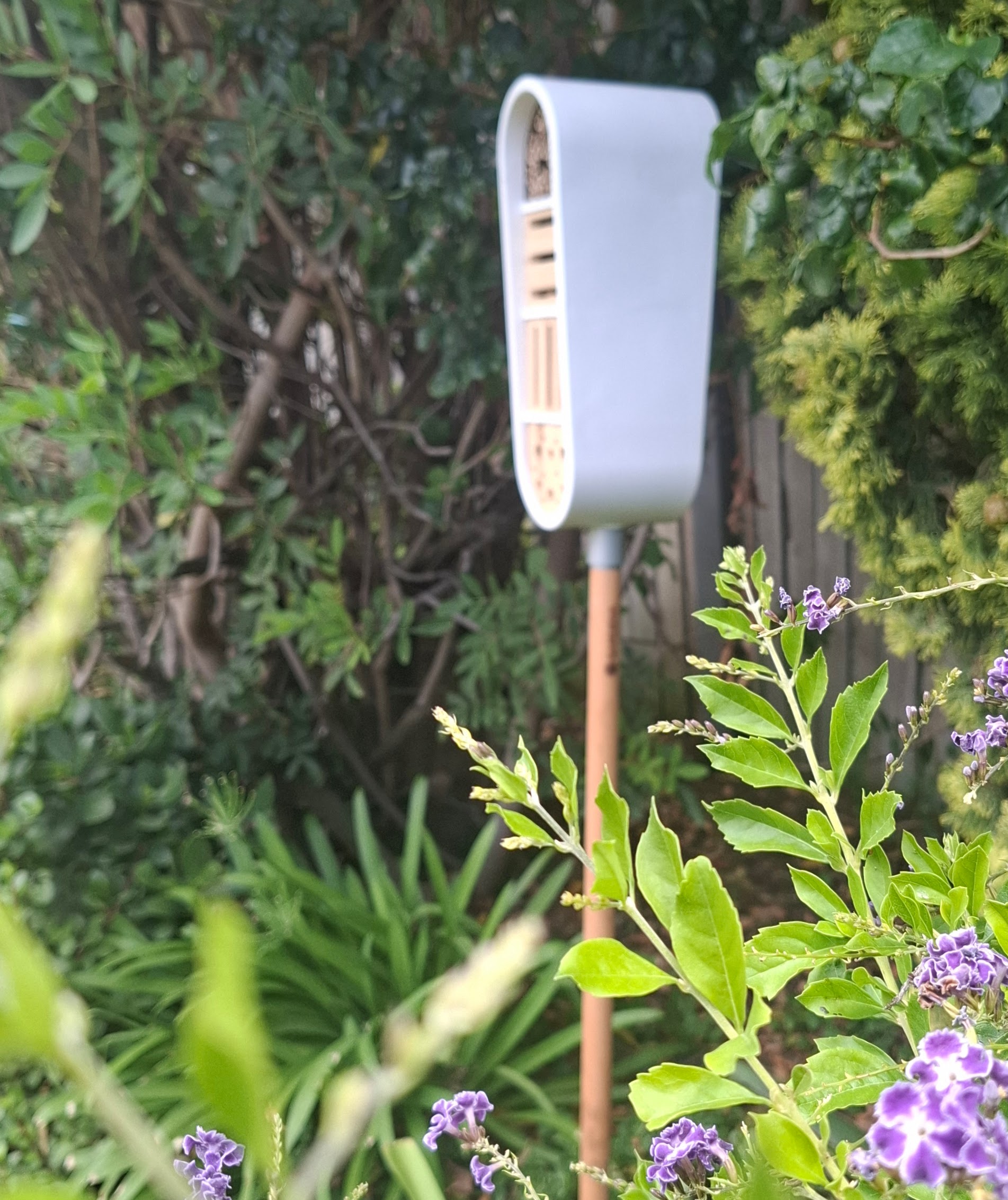
You're reading this because you're a human. We've covered that already. But the fact that you're still here, curious about a hotel you can never check into, says something good about you.
So here's the story.
A Brief History of the Insect Hotel
The idea of giving insects a place to nest is older than you might think. But the modern insect hotel as we know it first appeared in Europe in the late 1980s and 1990s, mainly in Germany and the Netherlands.
The problem was simple. Intensive forestry had tidied Europe's forests too well. Dead wood was cleared. Log piles were removed. Hollow stems were mowed. The untidy corners where solitary bees, wasps, and beetles had nested for thousands of years were simply gone.
Forest managers began to realise, somewhat late, that the insects they'd cleared out were the same ones pollinating crops and controlling pests. So they started putting out drilled wooden blocks and bundles of hollow twigs as replacement nesting sites. These early structures were built to work, not to look good. They were apologies in timber.
By the 2000s, insect hotels had spread across Europe. They evolved from forestry tools into garden features, school projects, and public art. Groups like Buglife in the UK and the Scottish Wildlife Trust championed them. The idea crossed the Atlantic, appeared in Australia and South Africa, and became one of the easiest ways to get involved in hands-on conservation.
Today, they are everywhere: in back gardens, on balconies, in schoolyards, at wine estates, and in the courtyards of architecture museums. The humble insect hotel has become a global movement.
How Far the Idea Has Spread
Not all insect hotels are small garden projects. In March 2022, a conservation company in the Scottish Highlands built a 199.9 cubic metre structure from felled Sitka spruce and bamboo, setting a Guinness World Record. In Helsinki, architecture students built a pavilion you can sit inside that doubles as a giant insect habitat. At the Suzuka Formula 1 Circuit in Japan, Sebastian Vettel installed eleven insect hotels at Turn 2 and had each team customise their own. The idea goes wherever people take it.
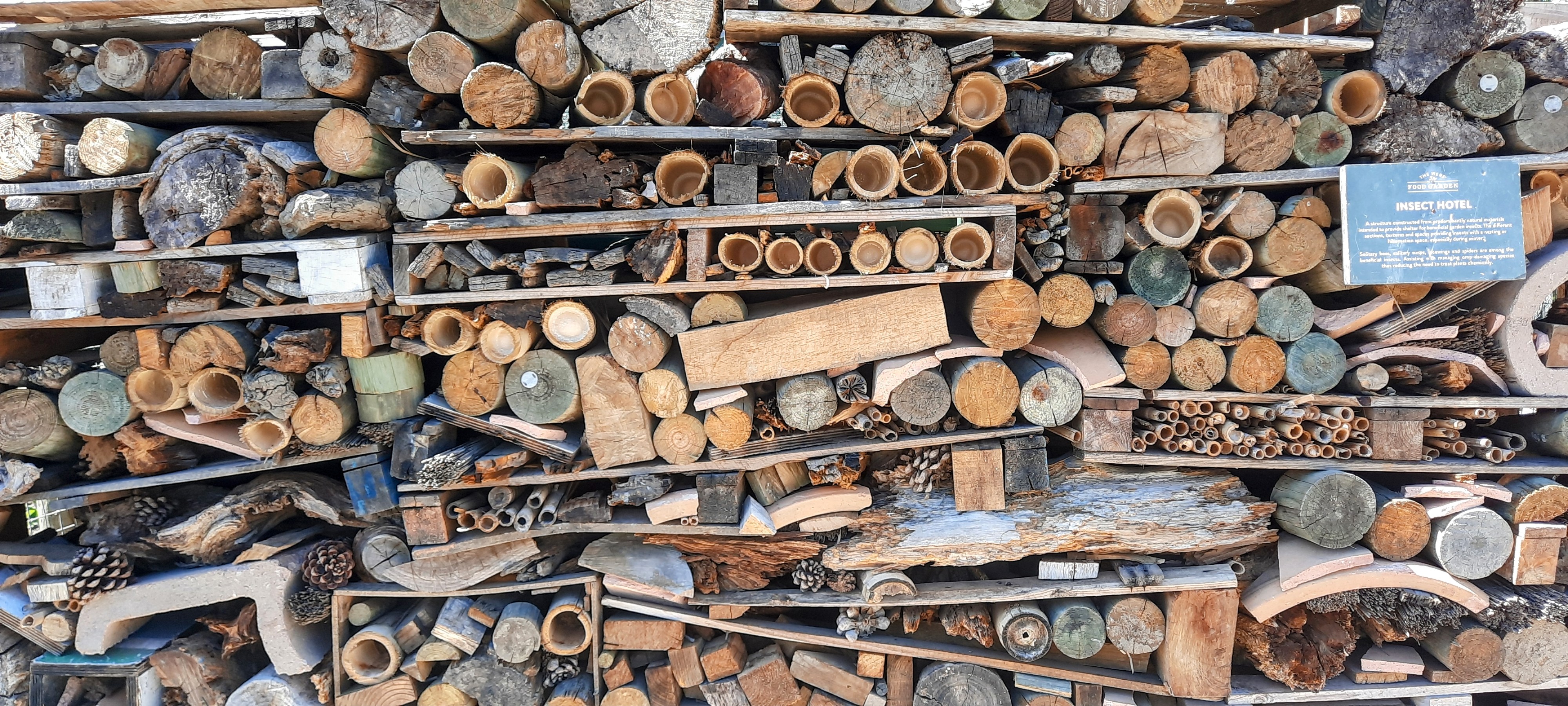
Closer to home, Boschendal wine estate in Franschhoek runs an insect hotel as part of its regenerative farming programme. It's a WWF Conservation Champion, and the hotel sits in a landscape where fynbos, orchards, and mountain slopes meet.
The full map, from Kew Gardens to Johannesburg, is on our Network page.
The corridor idea
Individual hotels help, but connected habitats transform. Across Europe and beyond, people are linking gardens, parks, and rooftop plantings into continuous pollinator corridors. Buglife in the UK is mapping three-kilometre-wide insect pathways through every county. Oslo has a citizen-driven bee highway. Seattle has a mile-long pollinator corridor connecting a university campus to a pocket park, and the idea has since spread to over 300 towns across 24 US states.
The point is always the same: a single insect hotel helps, but a connected network of habitats transforms. Even a flowering window box becomes part of something larger when it connects to its neighbours.
Why You Should Build One
You can't check into The Insect Hotel. But you can build your own. Here's why you should.
Because the habitat is vanishing
Insect numbers are falling everywhere, by an estimated 1 to 2.5 percent per year. Habitat loss, pesticide use, light pollution, and climate change are all to blame. The tidy gardens, paved driveways, and neat lawns that humans prefer are ecological deserts for insects. The fallen leaves, dead wood, and hollow stems that insects need have been swept, cleared, and mowed away. An insect hotel, even a small one, provides nesting and wintering habitat where none existed before.
Because your food depends on it
Solitary bees, hoverflies, and butterflies are behind roughly 75% of the world's food crops. Every solitary bee that nests in your insect hotel helps with this work, and it's worth more than you'd think: in Europe alone, pollination runs to at least $25 billion a year. A single red mason bee can pollinate as much apple blossom as 120 honeybees.
Because they're your garden's pest control
Insect hotels attract lacewings, whose larvae devour aphids by the hundred. They attract ladybirds, each of which can eat up to 5,000 aphids in its lifetime. They attract solitary wasps, which hunt caterpillars, beetle larvae, and other garden pests. An insect hotel is not just shelter; it's a biological pest control system that works while you sleep.
Because they teach
An insect hotel in a school garden, a community space, or your own back yard is a living lesson in ecology. Children (and adults) learn to watch, to name species, to understand seasonal cycles, and to appreciate the remarkable complexity of the small creatures that keep our ecosystems running.
Because anyone can do it
You don't need land. You don't need money. You don't need skill. A few bamboo tubes bundled together and hung on a sunny wall is a perfectly good bee hotel. A stack of old pallets filled with pine cones, bark, straw, and drilled logs is a five-star insect block of flats. The materials are free. The build is forgiving. And the guests are not fussy reviewers.
Who Will Check In?
Build it, and they will come. Here's who you can expect.
| Guest | What they need | What they give back |
|---|---|---|
| Solitary bees (mason bees, leafcutter bees) | Hollow tubes (bamboo, drilled wood), 6–10 mm wide | Pollination, far more efficient per bee than honeybees |
| Ladybirds | Pine cones, bark gaps, dry leaves | Aphid control, up to 5,000 aphids per lifetime |
| Lacewings | Straw, rolled cardboard, bark strips | Larvae eat aphids, mites, and small caterpillars |
| Solitary wasps | Hollow tubes, drilled wood, 3–8 mm wide | Pest control: they hunt caterpillars and beetle larvae |
| Butterflies | Vertical slits in wood panels | Pollination, beauty, and a sign of ecosystem health |
| Beetles | Loose bark, dead wood, log sections | Breaking down dead plant material and enriching soil |
| Earwigs | Upturned pots filled with straw or hay | Pest control: they eat aphids, mites, and insect eggs |
A Few Honest Warnings
Because we believe in honesty (see: House Rules).
Bigger is not always better
Research has shown that very large, tightly packed insect hotels can raise the risk of disease and parasites among residents. In nature, solitary bees nest in small, widely spaced groups. A modest hotel with well-chosen materials, cleaned once a year, works better than a huge structure left to rot.
Location matters
Face your insect hotel south to south-east (in the Southern Hemisphere, north to north-east). Place it at least a metre off the ground, sheltered from the main wind and rain. Put it near flowering plants, especially native species with strong UV nectar guides that your future guests can actually see (even if you cannot).
Not all hotels attract the right guests
A 2020 study in Marseille found that urban bee hotels were mainly used by an exotic bee species, whose presence lined up with lower native bee numbers in the area. Pair your insect hotel with native plantings to support local species, not invasive ones.
Start Small. Start Now.
You don't need to break a world record. You don't need a thousand hectares of fynbos. You need a drill, a block of untreated hardwood, and ten minutes.
Drill holes between 6 and 10 mm wide, at least 10 cm deep, angled slightly upward so rain drains out. Sand the entrances smooth. Fix the block to a sunny, sheltered wall. Wait.
Within weeks, sometimes days, a solitary bee will find it. She'll check the holes, choose one, stock it with pollen, lay an egg, and seal the entrance with mud or leaf bits. By next spring, a new generation will come out.
You'll have built a hotel. A tiny one. But a real one.
And somewhere, on a wine estate in Franschhoek, on a nature reserve in the Scottish Highlands, in a courtyard in Helsinki, and in thousands of gardens in between, the network grows.
Want to see what your guests see?
Take the UV verification challenge and find out why you'll never pass the check-in test.